VOIP for Schools: The Complete Phone Systems for Education Hub
When Your Education Phone System Misses a Call, You Miss a Parent — or Worse, an Emergency
Techmode provides VoIP for education organizations that need reliable calling across classrooms, administrative offices and multiple campuses.
Our cloud phone systems help K-12 schools, districts, colleges and universities improve parent and student communication while supporting E911, mobile staff and centralized administration.
We Understand How Your Campus Really Runs
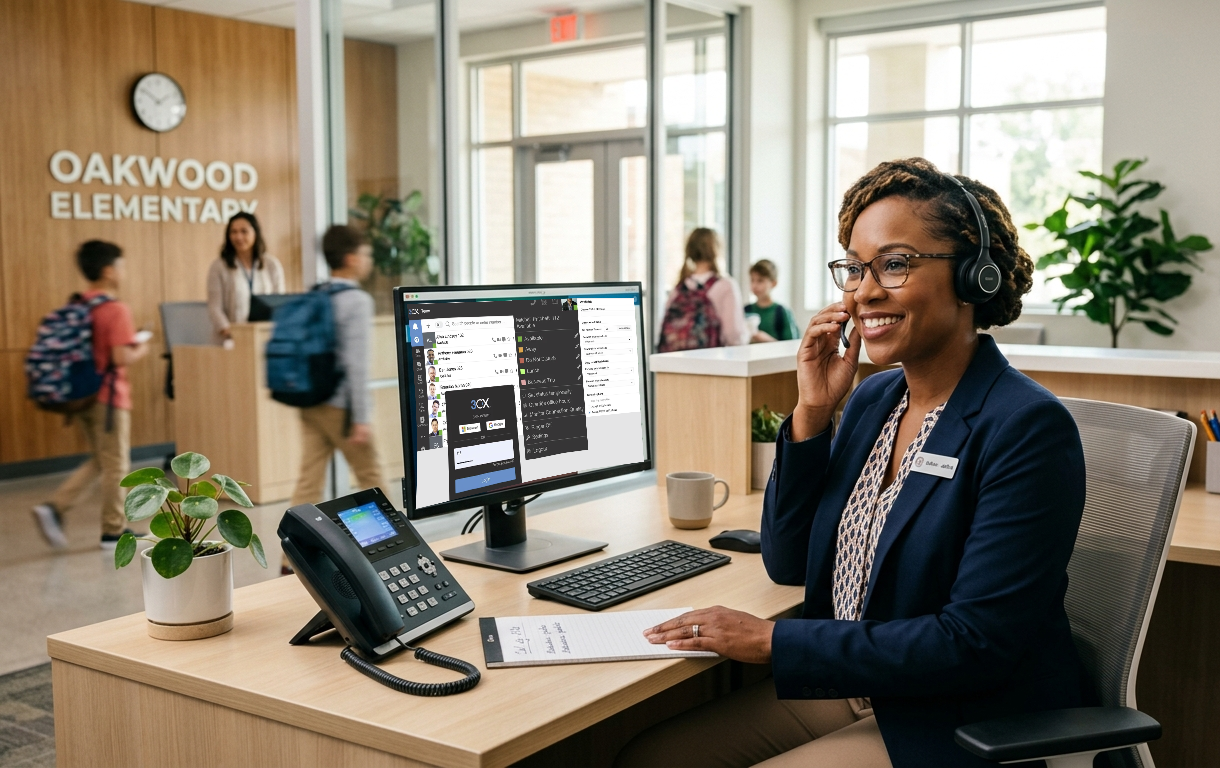
Most VoIP providers sell the same generic phone system to a dental office and a 12-building school district. We don’t. When we work with an educational institution, we start with the workflows that actually matter to your staff — not a features list built for someone else’s business.
See what that looks like on an ordinary Tuesday in our post, A Day in the Life of a School Front Office — including how dispatchable 911 changes what happens when a student gets hurt in the gym.

What Is VoIP for Education?
VoIP for education is a phone system built to run over the internet instead of copper phone lines, purpose-configured for how schools, districts, and campuses actually operate. Calls, voicemail, texting, and video all run through one cloud platform instead of a phone closet full of aging PBX hardware.
For an education institution, that distinction matters more than it does for most businesses. A retail store can tolerate a dropped call. A school can’t tolerate a dropped call from the nurse’s office, and it can’t tolerate a 911 call that reports the district’s front-office address when the emergency is actually three buildings away.
VoIP for education isn’t a generic business phone system with a school logo on the proposal. It’s built around the calendar a school actually runs on — the two-hour crunch at morning attendance, the semester-opening surge at the registrar, the after-hours call from a parent who works nights — and around the safety obligations that come with having minors and large populations on a shared campus.
VoIP for Education: Phone Systems for Schools and Campuses
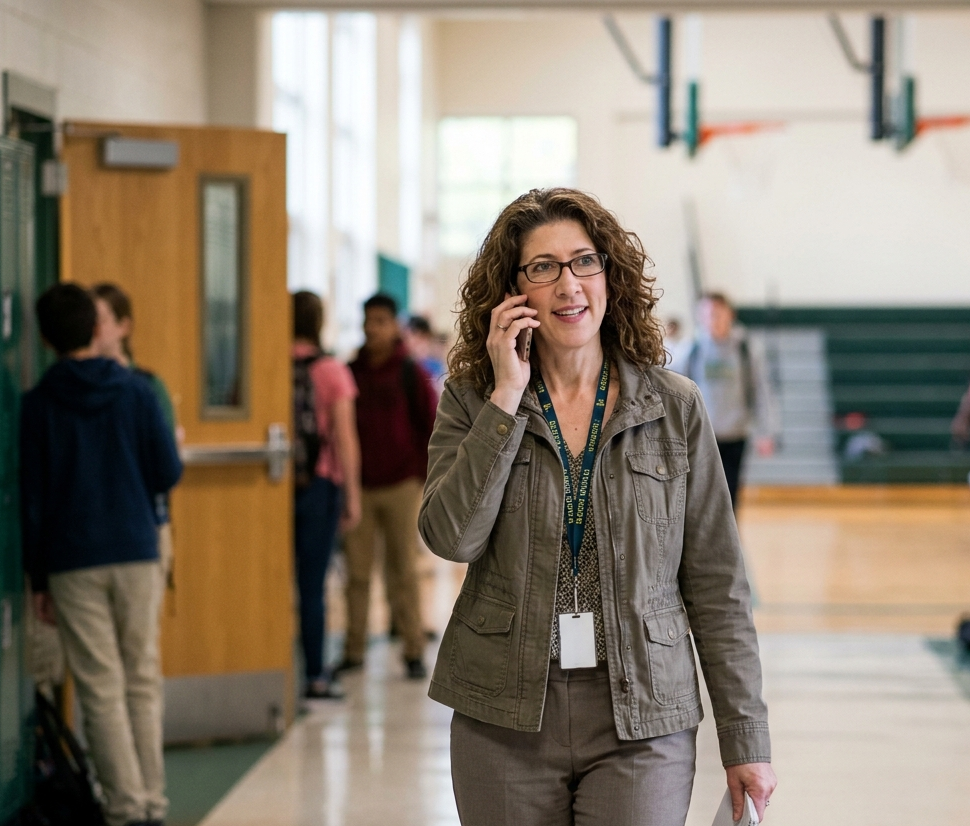
Education runs on communication that can’t fail — a parent needs to reach the front office, a nurse needs to reach a classroom, and a 911 call needs to reach the exact room it came from.
Techmode builds cloud phone systems for K-12 districts, private and charter schools, community colleges, and universities that need calling, texting, and video to work the same way whether it’s day one of the semester or the middle of a lockdown drill.
TechmodeGO runs on a private, triple-redundant AWS instance dedicated to each client, backed by U.S.-based Concierge support and a 99.999% uptime target — the same infrastructure model Techmode uses across every industry it serves, tuned to the schedules, staffing, and safety requirements that are unique to education.
Education VoIP Solutions by Institution Type
No two education organizations run their phone systems the same way. Techmode configures TechmodeGO differently depending on what kind of institution is on the other end of the deployment.
K-12 Public School Districts Multi-building, multi-school routing under one central administration, with each school needing its own auto-attendant, attendance line, and dispatchable E911 address — while still reporting up to a district office that needs visibility across all of it.
Private and Charter Schools Often single-building or small multi-site operations without a dedicated IT department. The priority is a system that runs itself day to day: simple call routing, mobile apps for administrators who wear multiple hats, and support that doesn’t assume there’s an in-house telecom person to call first.
Community Colleges A mix of academic departments, continuing education, workforce training, and administrative offices, frequently spread across a couple of buildings or satellite locations, with enrollment-driven call spikes concentrated around a handful of weeks each year.
Universities and Multi-Campus Systems Federated by nature — individual colleges, athletics, the health center, residence life, and facilities often each have their own history of phone decisions. The work here is less about installing phones and more about unifying decades of decentralized systems into one dial plan without forcing every department to give up the extensions people already know.
Vocational, Technical, and Trade Schools Programs that mix classroom instruction with hands-on labs and shop floors, where paging and instructor-to-instructor communication across noisy environments matters as much as the front-office phone line.
Where VoIP for Schools Has to Get It Right
Six moments where your phone system can’t afford to fail.

Attendance & Dismissal Calls
Every school has two windows where the front office phone rings nonstop: morning attendance and afternoon dismissal. A phone system for schools has to handle that volume without dropped calls, busy signals, or a queue that leaves a parent waiting through recess and lunch combined.
TechmodeGO’s call queuing and overflow routing keep the two busiest hours of the day from becoming the two most stressful.

Parent-Teacher Communication
Teachers need to reach parents without handing out a personal cell number — and parents need to reach the right classroom without navigating a district-wide switchboard.
With TechmodeGO, every teacher gets a direct extension or app-based line that displays the school’s number, not their own, keeping communication professional and personal boundaries intact.

Multi-Building Routing
Districts rarely operate out of one building. The main office, the nurse’s station, athletics, and satellite campuses all need to reach each other instantly — and callers need to reach the right building without being bounced between departments.
TechmodeGO’s multi-site routing treats every building as part of one connected system instead of a collection of separate phone lines.

Emergency Notification & E911
This is the one schools can’t get wrong. Every extension, in every building, needs to route emergency responders to the exact physical location — not just the district’s main street address.
Our E911 explainer breaks down why this matters, and our full E911 compliance guide covers what federal and state law actually requires of a phone system for schools.

Enrollment & Registration Surges
Call volume climbs hard at the start of every semester and during open enrollment.
A phone system for education has to absorb that spike without you having to buy temporary hardware or add phone lines you’ll only need for two weeks a year.

Crisis Response
A lockdown, a weather closure, or a district-wide announcement means every single phone has to work — the first time, with no exceptions. TechmodeGO integrates with existing paging and intercom systems, so a crisis announcement goes out from the same platform that handles everyday calls.
If your current provider has never asked about any of this, that’s the first sign you’ve outgrown them.
If your current provider has never asked about any of this, that’s the first sign you’ve outgrown them.
VOIP for Educational Institutions- What Techmode Provides
A phone system for education built around your budget, your staff, and your safety requirements — not a generic template.
Reliable Cloud Phone Service Without a Dedicated IT Department
Techmode’s cloud PBX runs on infrastructure we manage — no on-site servers, no phone lines to maintain, no surprise outage during morning drop-off.
New to cloud-based phone systems for education? Our plain-English guide to UCaaS explains how it works without the jargon.
Mobile Apps for Teachers and Administrators on the Move
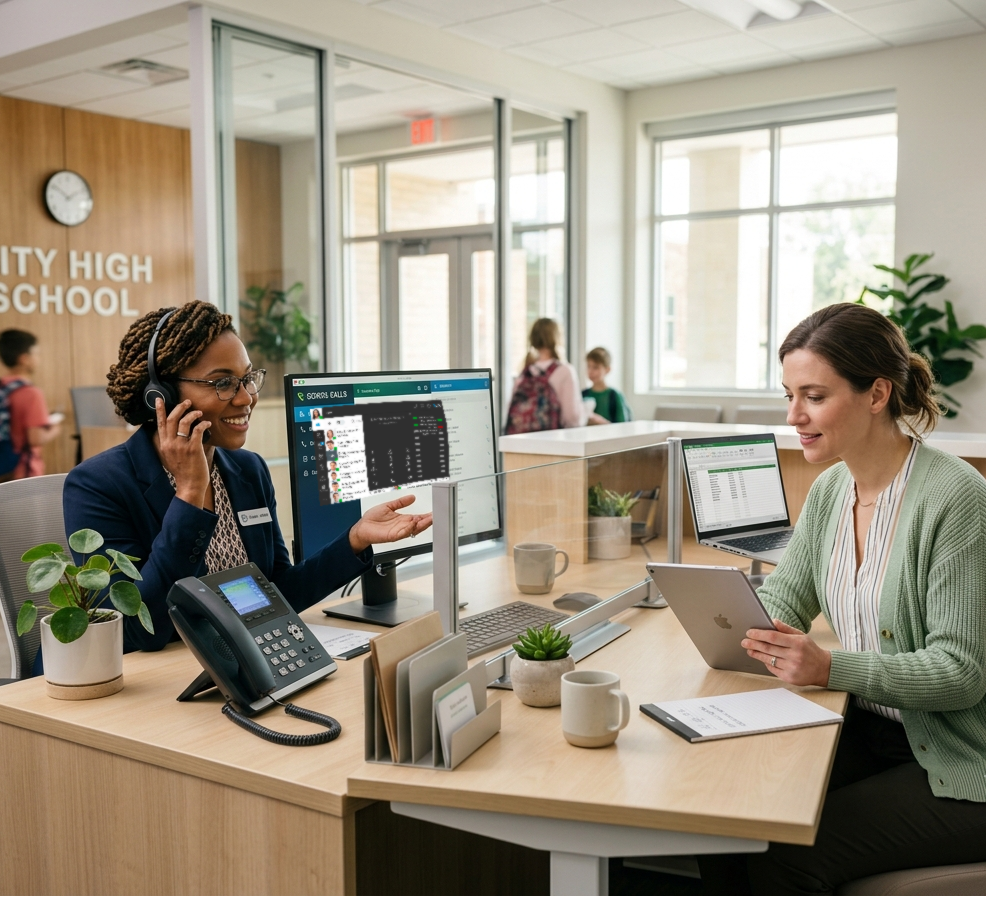
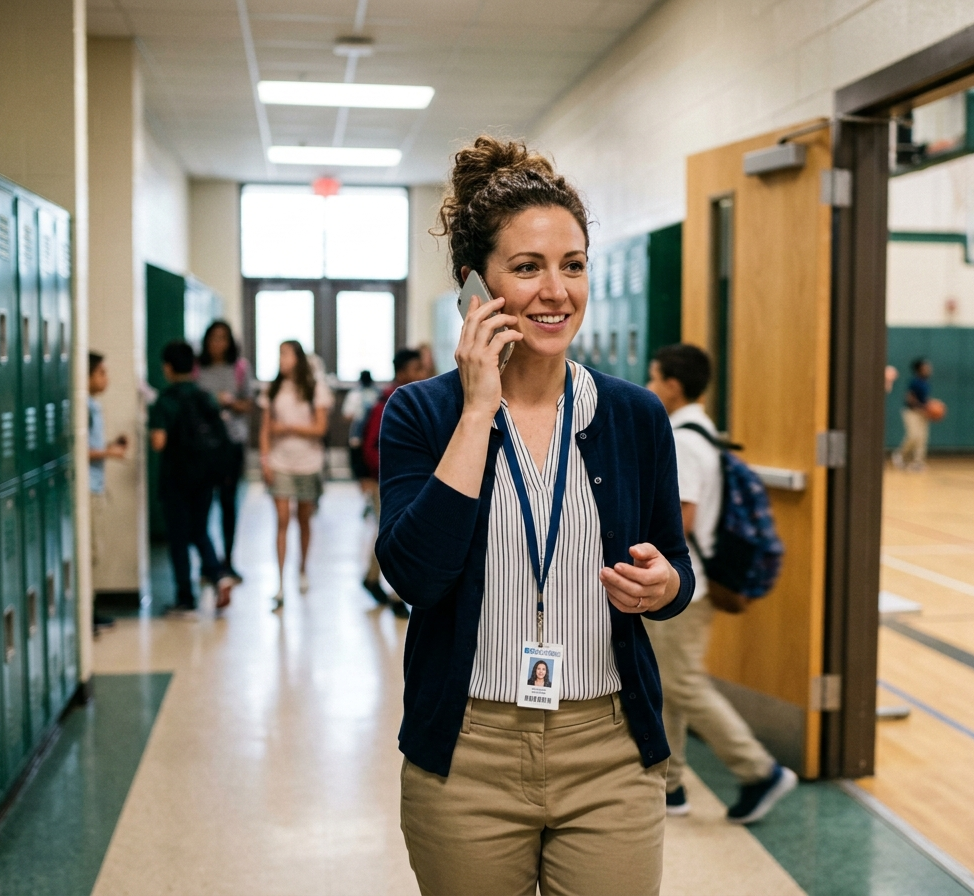
Our mobile and desktop apps let staff make and receive calls from the school’s number wherever they are — the gym, a field trip, or another building entirely.
Personal cell numbers stay private; the caller ID still shows the school.
Staff-Friendly Call Routing
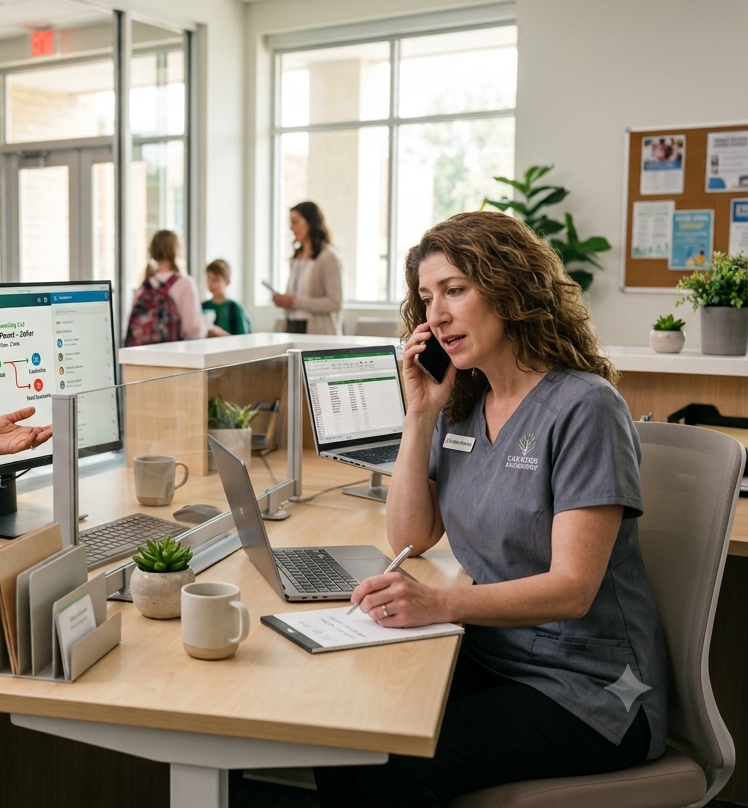
Set up call queues, ring groups, and after-hours routing that match how your school operates: attendance calls route to the front office with overflow handling, nurse-line calls ring multiple staff at once, and general inquiries roll to voicemail-to-email after hours.
Browser-Based Video Meetings, No Downloads Required
Parent-teacher conferences, tutoring sessions, and virtual classes shouldn’t require a student to create an account or download software. Our 3CX web meetings for schools run entirely in-browser, with built-in recording, whiteboarding, and screen sharing — included standard, not sold as an add-on.
Built for Enrollment Surges and the Start of Every Semester
When call volume climbs at registration or the start of a semester, Techmode’s cloud infrastructure scales with you — no extra hardware, no advance ordering of lines. Still running on-premise hardware? See what moving from on-prem PBX to the cloud actually looks like.
Transparent, budget-friendly pricing — per-user, no surprise fees. Depending on budget and cash flow circumstances, Techmode offers flexible options for monthly vs. upfront expenditures.
Techmode — VoIP for Education
Essential Education Phone-System Features
An education phone system earns its place in a school by handling these eleven features without requiring a workaround.
Call Handling & Routing
4 features
Auto-attendant and call queuing
Triage incoming calls before a human has to.
Dedicated attendance/absence lines
Kept separate from the general inquiry queue.
Multi-building and multi-campus routing
Every location on one connected system.
Ring groups for shared lines
The nurse's line, the front office, and other shared extensions ring multiple staff at once.
Safety & Emergency
2 features
Dispatchable E911
Routes emergency responders to the exact building and room.
Paging and intercom integration
Connects the phone system to existing overhead paging for emergency announcements.
Mobility & Communication
3 features
Mobile and desktop apps
Staff can call and receive calls from the school's number anywhere on or off campus.
Business SMS and MMS
Sends parent and student updates from the school's own number, not a staff member's personal phone.
Browser-based video meetings
No downloads or account creation, built in rather than sold as an add-on.
Records & Compliance
2 features
Voicemail-to-email
Routes after-hours messages to the right inbox automatically.
Call recording with configurable retention
Set to match state law and district policy.
VoIP for Higher Education: Built for Campuses, Not Just Classrooms
- Enrollment and financial aid surges. Call volume to the registrar and financial aid office doesn’t stay level year-round — it spikes hard during enrollment periods and FAFSA deadlines. A system that works fine in June can buckle in August.
- Department and faculty routing. Students need to reach a specific professor’s office, a department chair, or a lab coordinator — not a general switchboard that transfers them three times before landing anywhere useful.
- Multi-building, multi-campus operations. A university with a main campus and satellite locations needs every building to function as one connected system, not a patchwork of separate phone setups that happen to share a school name.
- Residence life and campus safety. Dorms, campus security, and after-hours facilities all need reliable lines that work independently of whether academic buildings are staffed.
How Techmode Supports Higher Education Phone Systems
TechmodeGO handles seasonal call surges without requiring a system overhaul every semester, routes calls directly to the right department or faculty extension, and connects every building on campus — or across multiple campuses — into a single system with unified routing. The same private-cloud, U.S.-based support model that works for K-12 districts scales to a university’s size and call complexity without losing the direct, person-to-person support that makes it work in the first place.
Frequently Asked Questions
What should a phone system for schools include?
At minimum: intelligent call routing so front-office staff aren’t manually triaging every call, dispatchable E911 that identifies the exact building and room, multi-building routing for districts with more than one campus, and paging/intercom integration for emergency announcements. See a real-world example in A Day in the Life of a School Front Office.
Is VoIP reliable enough for schools?
Yes — a properly configured VoIP for schools deployment includes redundancy and failover that traditional copper lines can’t match. TechmodeGO runs on private, triple-redundant AWS infrastructure with 99.999% uptime, so a single point of failure doesn’t take down the entire office.
How does E911 work for a multi-building school campus?
E911 (Enhanced 911) delivers a caller’s exact location to emergency dispatchers automatically. For a school with multiple buildings, this means a 911 call from the gym routes responders to the gym — not the district’s main office address three buildings away. Read the full breakdown in What Is E911? and Techmode’s E911 compliance guide.
Can teachers use video meetings without downloading an app?
Yes. Techmode’s 3CX web meetings run entirely in the browser — no download, no account creation, which matters for younger students in particular. See how it works in 3CX Web Meetings for Schools.
Does a phone system for schools qualify for E-Rate funding?
Many VoIP and UCaaS services qualify for E-Rate discounts under Category 1 or 2, depending on the specific services purchased and your district’s application. Eligibility depends on your specific setup — Techmode can walk through what applies during a consultation.
How much does VoIP for schools typically cost?
Pricing depends on the number of users, buildings, and features needed, but cloud-based systems typically cost less than maintaining legacy on-premise hardware once maintenance, hardware refresh cycles, and IT labor are factored in. Techmode offers transparent, per-user pricing with no surprise fees.
Can a phone system scale with our school as enrollment changes?
Yes. TechmodeGO scales up during registration surges or enrollment growth and back down during quieter periods, without requiring new hardware purchases either way.
Can a phone system handle enrollment-period call surges without slowing down?
Yes. Call volume during enrollment or financial aid deadlines is handled the same way any high-volume period is — through configured queuing and routing rather than a fixed capacity that gets overwhelmed.
Can students reach a specific professor or department directly?
Yes. Faculty and department extensions can be configured to ring directly, rather than routing every call through a general university switchboard.
Can a system connect multiple campuses or buildings into one network?
Yes. Multi-building and multi-campus deployments are configured to function as a single system, so an internal transfer between campuses works the same as a transfer within one building.
Does this replace our mass notification system for campus alerts?
No — a phone system and a mass notification platform serve different purposes. TechmodeGO handles day-to-day voice communication; campus-wide emergency alerts typically run through a dedicated notification system alongside it.
Ready to Talk?
Whether you’re a single-building charter school or a multi-campus district with hundreds of extensions, we can help you figure out what makes sense. No high-pressure sales calls, no 47-page proposals — just a real conversation about whether we’re the right fit.
Explore Our Full Library of School & Education Resources
Safety & Compliance
- What Is E911? — a quick explainer on Enhanced 911 and why it matters for multi-building campuses
- E911 Compliance Guide — federal and state E911 requirements every district should know
Video & Collaboration
- 3CX Web Meetings for Schools — browser-based video for classes, tutoring, and conferences, no downloads needed
Real-World Use Cases
- A Day in the Life of a School Front Office — how a modern phone system handles the 7:42 rush, and what happens differently in an emergency
Getting Started & Cost
- The ABCs of UCaaS — a no-jargon guide to cloud communications
- From On-Prem PBX to the Cloud — what changes when a school migrates off legacy hardware
- 7 Things to Know About Cloud Phone Systems — key considerations for smaller schools
Comparing Providers
- How Techmode Compares — see how Techmode stacks up against RingCentral, Nextiva, and others