

AI Summary
An AI phone answering service picks up a business’s calls, understands what the caller wants in plain speech, answers routine questions, takes messages or books appointments, and routes everything else to a person.
The market splits into two camps: standalone answering apps (Allo, Rosie, Goodcall, Upfirst) that sit in front of a phone number, and full phone platforms with AI built in (TechmodeGO, RingCentral, Quo, Dialpad).
The biggest difference between them usually isn’t voice quality.
It’s the billing model: per minute, per call, per unique caller, per seat, or credits.
The right pick depends on call volume, how many calls genuinely need a human, and whether call audio can leave the building for a public AI model.
Every AI answering service on the market promises the same thing: never miss a call again. Then the fine print shows up, and it has a meter attached.
Here’s a fun detail.
The top Google result for “AI phone answering system” is a best-of list written by Allo, an AI answering company.
Allo’s list includes Allo.
Readers will be stunned to learn how Allo did. Techmode also appears on the list below, so the same grain of salt applies here.
The difference is that every entry below spells out how it bills, what it’s actually good at, and where it bites.
This guide is written for business owners and office managers, not engineers.
No jargon without a translation, no “revolutionary conversational paradigms,” and no pretending a robot receptionist is right for every business.
Some of these services are genuinely great. Some are great until month three.
What Does an AI Phone Answering System Actually Do? (The Dummies Version)
Strip away the marketing and an AI answering service does four jobs:
- Picks up. Every call, any hour, as many at once as come in. No hold music, no voicemail roulette.
- Figures out why the caller is calling. Instead of “press 1 for sales,” the caller just says what they need and the AI interprets it.
- Handles the easy stuff. Hours, directions, pricing questions, appointment booking, taking a message.
- Hands off the rest. Transfers to a human, sends a text or email summary, or logs the call to a CRM.
That last job is where the options separate.
A good AI answering system knows what it doesn’t know and gets a person on the line fast.
A bad one loops the caller through three rounds of “I’m sorry, could you rephrase that?” until they hang up and call a competitor.
Businesses weighing whether full AI answering is a good idea in the first place should read Techmode’s honest look at why a fully AI receptionist often backfires.
This guide assumes the decision to try one has been made and focuses on picking the right one.
AI Answering Apps vs. AI Phone Systems: What’s the Difference?
Every service on this list falls into one of two buckets, and knowing which bucket matters more than any feature checklist.
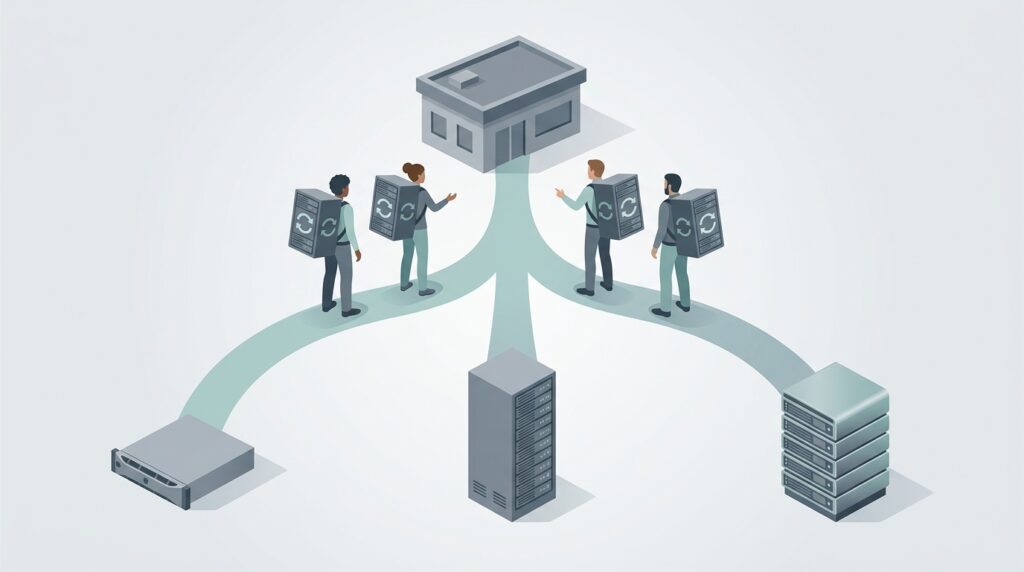
AI answering apps sit in front of an existing phone number. Calls forward to the AI, the AI handles what it can, and messages or transfers flow back to the business.
They’re fast to set up (often same day), cheap to start, and built for solo operators and small teams. The trade-off: they’re a separate tool bolted onto the phone system, so routing, queues, and reporting live somewhere else.
Phone platforms with AI built in are the whole phone system, with the AI receptionist as one component.
Calls, extensions, queues, mobile apps, SMS, recording, and AI all live in one place. Setup takes longer, but nothing gets duct-taped together.
Neither is automatically better.
A one-person plumbing business with a cell phone doesn’t need a full platform.
A 40-person office with departments, queues, and compliance requirements will outgrow an answering app quickly.
Techmode’s breakdown of AI based phone systems, pros and cons digs deeper into that split.
How Much Does an AI Answering Service Cost? (The Billing Model Is the Real Product)
Most AI answering services sound roughly similar on a demo call.
Where they differ wildly is how they charge, and the billing model decides whether the monthly bill stays boring or turns into a surprise.
| Billing model | How it works | Who it hurts |
|---|---|---|
| Per minute | Buy a bucket of minutes; long calls burn it fast | Businesses with chatty callers or long intake calls |
| Per call | Each answered call costs a set amount | High-volume businesses, including spam and wrong numbers |
| Per unique caller | Charged by distinct phone numbers per month | Businesses with lots of one-time callers |
| Per seat or add-on | AI priced per user or per agent on top of the phone plan | Growing teams adding people |
| Credits | Prepaid credits consumed per action or conversation | Anyone trying to forecast a budget |
| Included in the platform | AI features bundled into the phone system; usage billed by the AI provider | Rarely anyone, but check who marks up the AI usage |
The question to ask every vendor is simple: what does the bill look like in a busy month? If the answer involves the word “depends” more than twice, that’s the answer.
The 10 Best AI Phone Answering Services
Each entry covers what it is, how it bills, and a short teardown of what the brochure leaves out.
Pricing was verified on each vendor’s own site at publication, and every price links to its source.
Vendors change pricing often, so the linked page always wins.
1. TechmodeGO (3CX AI Edition, Hosted by Techmode)
What it is: A full business phone platform with AI built in. The AI bundle includes an AI Receptionist, AI Personal Assistant, AI Agents for specific workflows, AI transcription, and sentiment analysis, all on the same system that runs extensions, queues, SMS, and mobile apps.
How it bills: The AI Receptionist and AI Personal Assistant are included in the TechmodeGO 3CX AI bundle, not sold as an upsell.
For AI usage, Techmode connects the phone system to the client’s own AI account, such as ChatGPT or Grok, and the client pays the AI provider directly for what it actually uses.
No middleman marking up minutes, no prepaid bucket to burn through. See transparent pricing for current numbers.
The teardown: The standout is engine choice. Businesses can run AI through ChatGPT, Grok, their own self-hosted AI server, or Techmode’s private AI server, which is SOC 2 compliant and HIPAA compliant.
For a law firm or medical practice, that means call audio doesn’t have to leave for a public AI model, and there’s no per-token meter to forecast on the private server.
The platform also connects to AI through the 3CX MCP server for reporting on and managing the phone system. The trade-off: this is a real phone system, not a same-day app.
Setup runs through a project plan, which is overkill for a solo operator with one cell phone. More detail is in the 3CX AI Edition breakdown.
Best for: Businesses of 5 to 500+ that want AI inside a full phone system, especially in regulated industries.
2. Allo
What it is: A mobile-first business phone app aimed at small teams and salespeople, with an AI receptionist, call summaries, and a power dialer.
How it bills: Allo’s site lists Solo at $10 per seat per month billed yearly, Business at $32 per seat per month billed yearly ($45 month to month), and Ultra at $100 per seat through sales.
The AI receptionist is an add-on at $32 per month per agent billed yearly. There’s a 7-day free trial and a 30-day money-back window.
The teardown: Allo is genuinely easy. Self-serve setup, taking calls the same day, clean app.
The catch is that the pricing has been a moving target. Earlier this year, independent reviewers described Allo’s AI receptionist as unlimited and included on the entry plan.
Allo’s own site now lists it as a paid add-on. Neither version is a scandal, but a business budgeting for a year should screenshot the pricing page on signup day.
Allo also markets itself against 3CX as “legacy IT” that requires a server, which would be news to every business running hosted 3CX in the cloud with no server in sight.
Best for: Solo operators and small sales teams who live on their phones and want to be up and running this afternoon.
3. Smith.ai
What it is: A hybrid service offering either AI-first answering or human receptionists (with AI assist), which makes it one of the few options that can blend the two.
How it bills: Per call. Smith.ai’s AI-first plans start free for 25 calls a month with $3 for each extra call, then Pro starts at $150 per month for 75 calls.
Human-first plans start at $300 per month for 30 calls. Extras like appointment booking can add per-call fees.
The teardown: The human-first option is the real differentiator.
Calls with emotion, nuance, or legal intake can go to a trained person. The per-call model is predictable at low volume but gets expensive fast, and spam calls still count as calls.
Smith.ai is also a standalone service, so it needs a separate phone system behind it.
Best for: Law firms and professional services that want a human safety net and take a modest number of calls.
4. Rosie
What it is: An AI-only answering service trained on the business’s website and Google Business Profile, built for small service businesses.
How it bills: Per minute bucket. Rosie’s plans start at $49 per month for 250 minutes. In-call appointment booking and live transfers sit on higher tiers.
The teardown: The entry price is attractive, but $49 buys message-taking, not a full receptionist.
Businesses that need the AI to book appointments or transfer calls to a person are really shopping the next tier up. Minute buckets also punish long conversations.
Best for: Solo owners and home service businesses replacing voicemail with something that actually talks back.
5. Goodcall
What it is: An AI phone agent for local businesses that handles lead capture, scheduling, and custom call logic.
How it bills: Per agent, with a cap on unique callers each month (100, 250, or 500 depending on plan) and $0.50 for each unique caller over the cap. Minutes are unlimited.
The teardown: Unlimited minutes is a real perk for businesses with long calls or loyal repeat callers, since a customer who calls ten times counts once.
The flip side: a busy business with lots of one-time callers blows through the cap and pays overage. Pricing is also per agent, so multiple locations or lines multiply the bill.
Best for: Businesses with a steady base of repeat customers and longer calls.
6. Quo (Sona AI Agent)
What it is: Quo, formerly OpenPhone, is a business phone app for small teams.
Its AI agent, Sona, answers calls, captures details, and transfers when needed.
How it bills: Phone plans start at $19 per user per month billed monthly. Every plan includes 10 Sona calls a month.
Beyond that, Sona tiers run from $25 a month for 40 calls up to $199 a month for 600 calls, with overage between $0.45 and $1.00 per call.
The teardown: Having the AI inside the phone app is a genuine advantage over bolt-on services.
But 10 free calls a month is a trial, not a receptionist. Budget for a Sona tier from day one, and note that transfers, phone menus, and CRM integrations live on the higher phone plans.
Best for: Small teams already on Quo that want AI answering without adding another vendor.
7. RingCentral AI Receptionist (AIR)
What it is: RingCentral’s AI receptionist, available as an add-on to RingCentral phone plans and, in a newer standalone version, alongside other phone systems.
How it bills: From $59 per month with 100 minutes included, plus additional 100-minute bundles. Independent reviewers report overage around $0.50 per minute.
The teardown: It’s a capable product from a big vendor.
But 100 minutes is roughly 30 to 50 real calls, so most businesses will buy bundles. And on a RingCentral phone plan, it’s another line item stacked on the per-user seat price.
The AI isn’t missing. It’s metered and stacked.
Best for: Businesses already on RingCentral that want AI answering without switching platforms.
8. Dialpad AI Agent
What it is: Dialpad’s fully automated inbound AI product, part of a phone platform known for its AI features.
How it bills: Credit-based, with no published per-conversation rate and no monthly ceiling.
The teardown: Dialpad earns genuine credit for its AI, and core features like transcription come bundled.
The fully automated agent is where budgeting gets hard, because a credit model without a published rate makes it tough to predict a busy month.
Techmode’s Dialpad pricing breakdown covers the details.
Best for: Larger teams already committed to Dialpad that can live with variable AI spend.
9. Upfirst
What it is: A low-cost AI answering service and virtual receptionist for small businesses.
How it bills: Per call. The starter plan runs $24.95 a month for 30 calls, with $1.50 for each additional call.
The teardown: One of the cheapest entry points on the list, with most features included on every plan instead of locked behind tiers.
The math only holds at low volume, though. At $1.50 per extra call, a business taking 200 calls a month is paying real money for an answering app that still needs a phone system behind it.
Best for: Very small businesses with low, predictable call volume.
10. Ruby (The Human Benchmark)
What it is: Not AI at all. Ruby is a human-only virtual receptionist service with more than two decades in business and U.S.-based receptionists answering in the business’s name.
How it bills: Per minute. Plans start at $250 a month for 50 minutes, and the overage rate isn’t published.
The teardown: Ruby is on this list as the yardstick. It’s what great human answering costs, and it’s often several dollars per minute.
Some businesses genuinely need that warmth and judgment on every call.
Most need it on some calls, which is the argument for AI that hands off to people well, not AI that replaces them.
Best for: Businesses where every caller must reach a human and budget comes second.
Quick Comparison
| Service | Type | Billing model | Human handoff | Private AI option |
|---|---|---|---|---|
| TechmodeGO | Full platform | AI bundle included; usage billed direct by AI provider, no markup | To own staff, same system | Yes (Techmode or self-hosted) |
| Allo | App | Per seat + AI add-on | Transfer | No |
| Smith.ai | Service | Per call | Human receptionists available | No |
| Rosie | App | Minute buckets | Higher tiers | No |
| Goodcall | App | Per agent, unique caller caps | Transfer | No |
| Quo (Sona) | App/platform | Per user + call tiers | Transfer on higher plans | No |
| RingCentral AIR | Add-on | Minute bundles | Transfer | No |
| Dialpad AI Agent | Platform add-on | Credits | Transfer | No |
| Upfirst | App | Per call | Transfer | No |
| Ruby | Human service | Per minute | Human by default | Not applicable |
How to Pick One Without Regretting It
Before signing up for anything, a business should answer five questions honestly.
- How many calls come in during a busy month, and how long do they run? Multiply that by each vendor’s billing model. The cheapest sticker price is often the most expensive bill.
- How many calls genuinely need a human? If the answer is “most of them,” an AI receptionist should route, not resolve.
- Where does call audio go? Healthcare, legal, and financial calls carry sensitive data. Ask which AI engine processes the call, whether the vendor signs a BAA, and whether a private option exists.
- Is this replacing the phone system or sitting on top of it? Two vendors means two bills, two support lines, and two places for things to break.
- Who fixes it when call flows change? New hours, a new department, a holiday. Self-serve sounds great until the office manager is rebuilding call logic at 9 p.m.
Techmode’s guides on whether an AI auto attendant is worth the cost and AI auto attendant best practices go deeper on escalation paths and data handling.
How Techmode Does AI Phone Answering Differently
Every problem on this list comes back to the same few things: meters nobody can forecast, AI bolted onto a separate phone system, call audio shipped off to a public model, and nobody to call when the AI gets it wrong.
TechmodeGO puts the AI inside the phone system instead of on top of it. The AI Receptionist, AI Personal Assistant, AI Agents, transcription, and sentiment analysis are all part of the TechmodeGO 3CX AI bundle, running on private, per-client AWS instances with triple redundancy, nightly snapshots, backups to Google Cloud, and a 99.999% uptime SLA.
Businesses choose the AI engine: ChatGPT, Grok, their own self-hosted server, or Techmode’s private AI server, which is SOC 2 compliant and HIPAA compliant. As a CLEC and carrier of record, Techmode owns the platform, the lines, and the outcome, and every number goes out with A-level STIR/SHAKEN attestation. Read more about AI Phone System features.
Getting there doesn’t mean a weekend of YouTube tutorials.
Premier Launch is Techmode’s white glove installation, with a dedicated project manager and install team who design the call flows, decide where AI answers and where a person picks up, and test everything before go-live.
After the sale, Concierge Services take over: a U.S.-based team available 24/7, with no offshore call centers, handling upgrades, consulting, and changes under a lifetime configuration guarantee.
When the business adds a department or changes its hours, a real person who knows the system makes the update.
That’s why Techmode holds an NPS of 85.7 from over 1,000 post-support customer surveys, against an industry benchmark near 31, backed by an A+ BBB rating and more than 20 years in business communications.
Businesses that want AI answering without the meter, the duct tape, or the privacy gamble can see how Techmode’s AI phone system works.
Frequently Asked Questions
Q: What is an AI phone answering service?
A: An AI phone answering service uses artificial intelligence to answer a business’s calls, understand what callers say in plain language, and respond. It can answer common questions, take messages, book appointments, and transfer callers to a person when needed. Some are standalone apps, and others are built into a full business phone system.
Q: How much does an AI answering service cost?
A: Entry prices range from free trial tiers to roughly $50 to $150 a month for small business plans, with human-backed services costing several hundred dollars a month or more.
The billing model matters more than the sticker price, since per-minute, per-call, and credit-based plans all grow with call volume. Businesses should price out a busy month, not an average one.
Q: What is the best AI phone answering service?
A: The best AI phone answering service depends on the business. Solo operators often start with an answering app like Allo, Rosie, or Upfirst; businesses that want a human safety net look at Smith.ai; and businesses that want the AI receptionist built into a full phone system, with a private AI option for sensitive calls, look at TechmodeGO. The best AI receptionist is the one whose billing model still makes sense in a busy month.
Q: Is an AI phone answering system HIPAA compliant?
A: It depends on the vendor and the AI engine processing the call. Healthcare businesses need a signed BAA and should confirm where call audio and transcripts are stored and processed. Platforms that offer a private, HIPAA compliant AI server keep sensitive audio from going to a public AI model.
Q: What’s the difference between an AI answering app and an AI phone system?
A: An AI answering app sits in front of an existing phone number and forwards calls to an AI, while the phone system itself lives somewhere else. An AI phone system includes the AI receptionist as part of the whole platform, alongside extensions, queues, texting, and reporting. Apps are faster to start; platforms scale better and keep everything in one place.